
Morocco first African country to host integrated EV battery factory
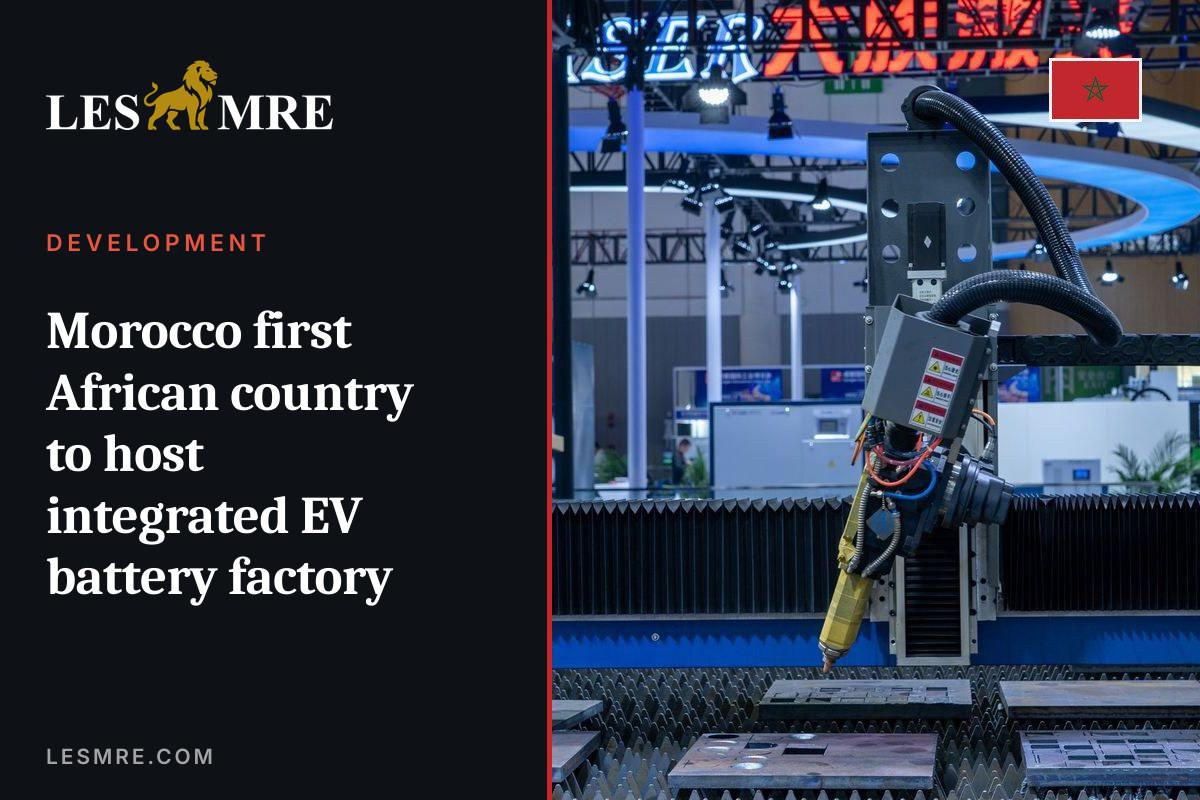
According to industries.ma, Morocco will host a Gotion High-Tech EV battery plant. The AfDB approves a $110 million loan. Le360 reports the inauguration of the COBCO plant in Jorf Lasfar, which plans 3,600 jobs.
On 27 July, industries.ma reports that Morocco becomes the first African country to host an integrated electric‑vehicle battery manufacturing plant, driven by the Chinese group Gotion High‑Tech in the Rabat‑Salé‑Kénitra region. Two days earlier, Bladi announces the African Development Bank’s approval of a US $110 million loan to Gotion Power Morocco to finance this first phase, with an additional mobilisation of up to US $162.6 million from development partners planned.
The first phase of the Gotion project provides for an annual capacity of 10 GWh of lithium‑iron‑phosphate (LFP) batteries, mainly for electric vehicles, with a potential expansion to 100 GWh in the long term, according to industries.ma. Bladi notes that the investment should create more than 600 direct jobs and achieve a local industrial integration rate of 70 %, the aim being to develop around the plant a Moroccan network of suppliers, technical skills and battery‑related activities. In October 2025, consonews.ma already indicated that the Chinese group confirmed the construction of this giant factory in Kénitra, for an estimated investment of over 12 billion dirhams and a commissioning scheduled for 2026. The site is expected to produce more than 20 GWh per year, part of which will be exported to Europe and the rest for the domestic market. Partnerships with universities and engineering schools are planned to train a new generation of technicians and engineers specialised in energy storage and green chemistry.
L'amont matière avec COBCO
On 25 June 2025, Le360 reports the inauguration at Jorf Lasfar of the COBCO plant, a joint‑venture between the pan‑African fund Al Mada and the Chinese giant CNGR. An investment of 20 billion dirhams on more than 200 hectares for a production of 40,000 tonnes of lithium‑ion battery materials. According to Le360, the project foresees the creation of more than 3,600 direct and indirect jobs and the production of components to equip 1 million electric vehicles per year, with a final capacity of 70 GWh/year of materials.
The outlet highlights the local valorisation of critical Moroccan metals, phosphate, cobalt, manganese, through integrated transformation processes: “these strategic raw materials are no longer merely extracted or exported, but converted on site into high‑value‑added components”. COBCO deploys a dual technological specialisation: NMC precursors (120,000 tonnes/year) with integrated refining of critical materials, LFP cathodes (60,000 tonnes/year) in a later phase, and recycling of black mass (30,000 tonnes/year). The site benefits from a strategic location near the OCP group, a deep‑water port and high‑capacity electrical and logistical infrastructure, delivering competitiveness on delivered costs and reducing the carbon footprint of maritime transport.
Un écosystème automobile en mutation
Already home to more than 250 automotive companies and equipment manufacturers, including Renault and Stellantis, Morocco is thus seeking to move from vehicle assembly to the production of their most strategic components, reports Bladi on 25 July. The future gigafactory must also rely mainly on renewable energies. Two major plants now anchor the Kingdom in the global electric‑vehicle value chain.
Sources
- •industries.ma (industries.ma), 27 juillet 2026
- •consonews.ma (consonews.ma), 23 octobre 2025
- •Bladi (bladi.net), 25 juillet 2026
- •Le360 (fr.le360.ma), 25 juin 2025
Related articles
Related practical guides
Are you an MRE?
Join the platform and reach verified professionals in Morocco. Free.
Have a project in Morocco?
Find a LesMRE-verified expert to guide you through your steps.
Find an expert →