
Port congestion. Habib Hjiaj: The port is a transit point, not a storage facility
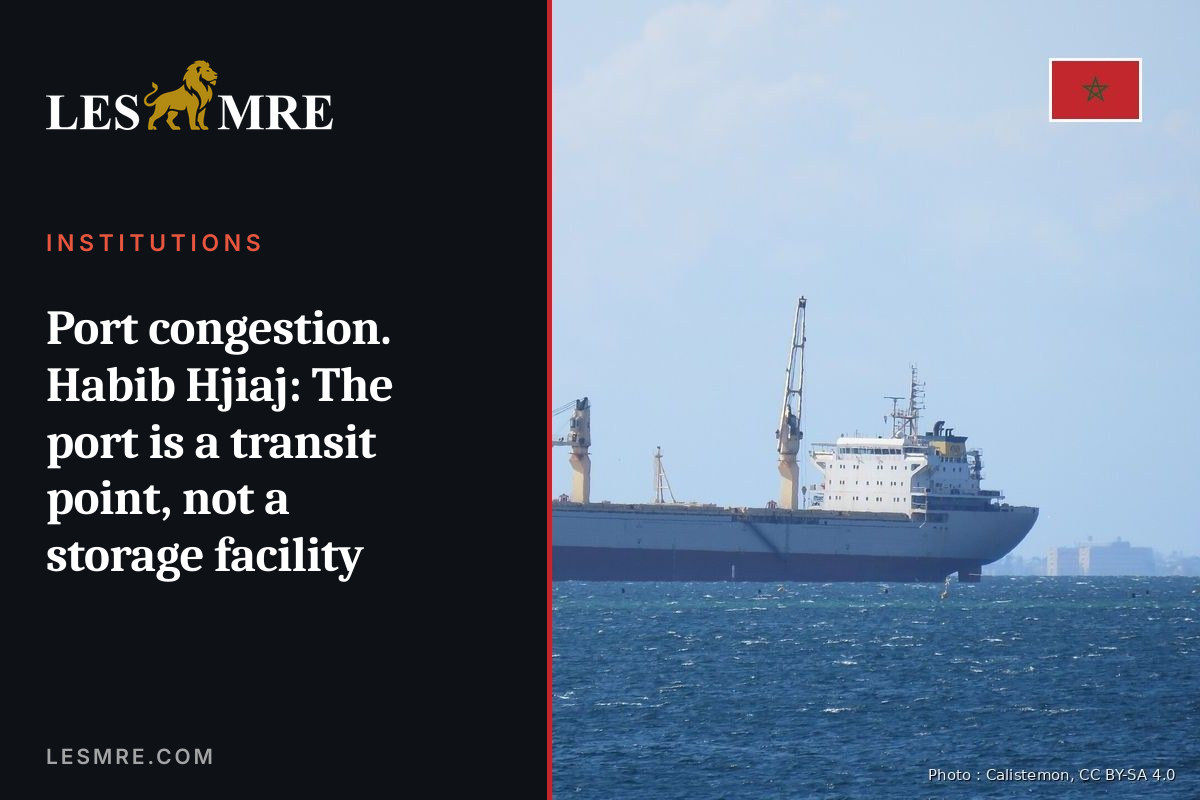
Port congestion generates $100M in demurrage over five months in 2026, with wait times rising from 12 to 25 days. The cause is prolonged port storage instead of transit. The new ANP regulation requires operators to invest in storage and evacuation capacities to durably reduce the foreign exchange bill.
Port congestion weighs on the grain bill
Port congestion weighs heavily on the grain sector and animal feed. Demurrage charges are said to have reached nearly 100 million dollars over the first five months of 2026. The average vessel waiting time is reported to have risen from 12 days in 2024 to 25 days in 2026.
The main bottleneck is not at the quayside. Congestion stems primarily from certain practices. Some operators, though not all, continue to use port facilities as storage space, even though a port is fundamentally a transit hub. When a cargo remains immobilised at the port, it occupies the space needed for the next one. The terminal fills up, the following vessel cannot unload and queues lengthen, to the detriment of all operators, including the best‑organised ones.
The value chain rests on three categories of storage, each serving a different function and time horizon. First there is port transit stock. Goods should not remain there for more than 15 to 20 days. Next comes the industrial working stock, intended to guarantee the availability of raw materials needed for production. It typically covers between 45 and 90 days of output. Finally, strategic stock falls under state policy. Congestion arises precisely when transit storage is used to fulfil the roles of industrial or strategic storage.
Demurrage charges feed into the cost price of goods, just like freight. They therefore end up in the prices paid by livestock farmers, and ultimately by consumers. Vessel waiting times thus help to fuel food inflation. However, to date there is no consolidated official figure that allows this impact to be measured precisely across the sector.
The new ANP regulation should change the situation. The operators concerned will have to invest in their storage capacity and evacuation means. Developing intermediate storage capacity inside the country is necessary to sustainably reduce the foreign‑currency bill. Every dirham invested in storage and logistics makes it possible to sustainably cut a bill paid in foreign currency, while keeping that value within the national economy.
Related articles



Related practical guides
Are you an MRE?
Join the platform and reach verified professionals in Morocco. Free.
Have a project in Morocco?
Find a LesMRE-verified expert to guide you through your steps.
Find an expert →