
Spain modifies maritime protocols after Moroccan navy passage late July
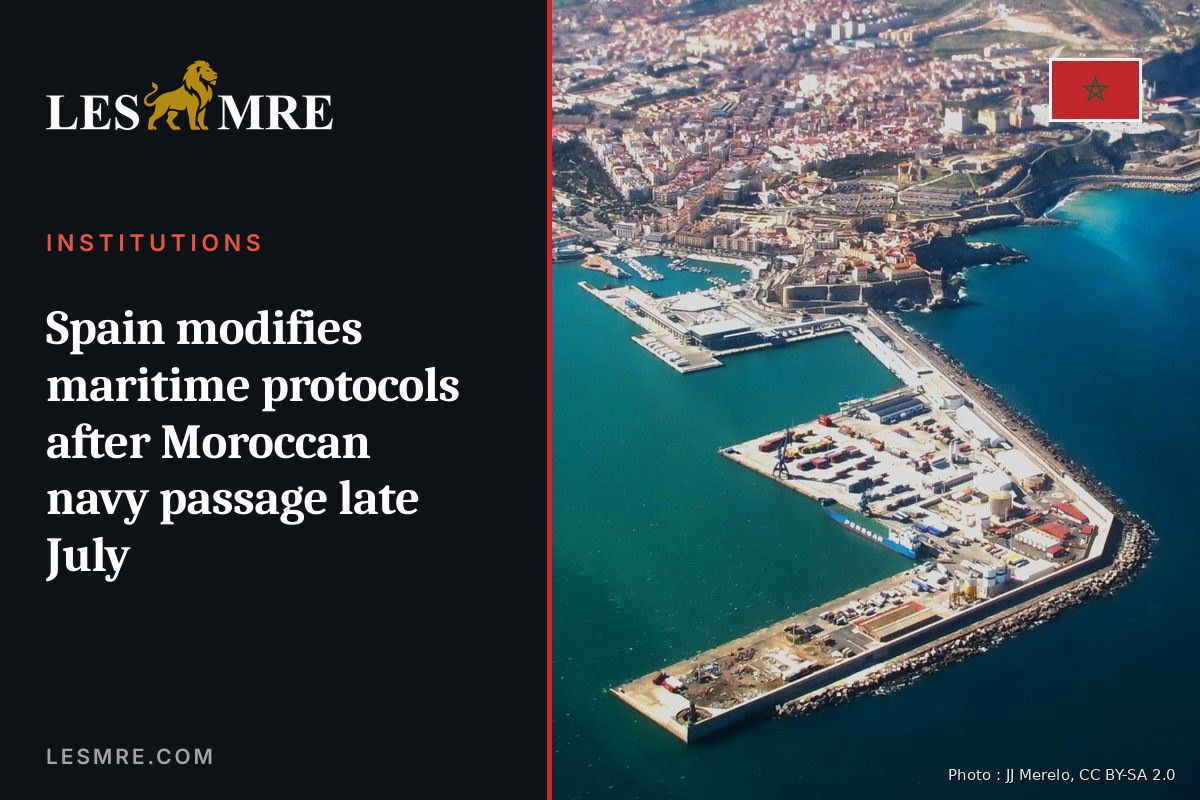
According to El Mundo, Spain has formalized a naval doctrine shift: its patrol boats now intercept Moroccan vessels. Moroccan activity decreased after July. The risk of tension persists, according to the newspaper.
On 17 October, the patrol vessel Atalaya is stationed at Ceuta, the Isla de León at Melilla. The Spanish Ministry of Defence formalised a doctrinal shift born on 30 July that day: "We no longer wait to act," sums up a military source quoted by El Mundo.
A shift in operational posture
Until now, control of "innocent passage" fell solely to the Navy's COVAM operational centre. Henceforth, Spain deploys its units to meet Moroccan vessels. "We are more vigilant, we no longer wait for them to enter before acting," explains the same military source to El Mundo. The Atalaya, based in Ferrol, with 48 crew members, four machine guns and a cannon, constitutes one of the main units. The Isla de León, more discreet, 10 sailors, a Browning machine gun, CETME rifles, POSTAS shotguns and 9 mm pistols, usually operates at Ceuta and on Perejil Island; it has been redeployed to Melilla "in the face of the Moroccan offensive," according to the newspaper.
A decline in Moroccan activity and a reminder of the legal framework
The facts contradict the idea of continuous pressure. Moroccan naval activity has "decreased notably" after July and, in the ten days preceding publication, "no movement has been recorded," notes El Mundo. Sources from the Ministry of the Interior and the Navy confirm that no "innocent passage" has taken place "neither last Thursday nor on the days of the visit."
Madrid hopes the visible presence of the patrol vessels will act as "a deterrent element": the vessels "know they may find themselves face to face with a Spanish unit that will track their movements and can intervene if the legal conditions for doing so are met."
The 30 July episode as a turning point
According to an El País report of 12 October, during the land border breach at Ceuta, the flagship Mohamed VI "entered Spanish territorial waters," joined by two patrol vessels, forcing the mobilisation of ships from Rota and the intervention of the JEMAD with Morocco to "demand they cease their attack." The episode marked a "tipping point": the difference lies not in detection, already established, but in the "decision to reinforce this monitoring with a reactive stance."
Pressure on land and maritime boundaries obliges Spain to "combine the defence of its sovereignty with the management of a bilateral relationship in which cooperation is decisive in areas such as security, immigration and the fight against criminal networks." The dilemma remains: "An insufficient response can fuel the perception that certain actions meet no opposition; a reaction that fails to weigh its consequences, on the other hand, can worsen a diplomatic crisis." The risk that an encounter at sea "drifts into a new episode of tension" persists, especially "when the craft involved belong to the armed forces of two neighbouring countries."
Two months after the July incident, Madrid tests the sustainability of this reinforced surveillance.
Sources
- •El Mundo (elmundo.es), 17 October 2026
Related articles

Related practical guides
Are you an MRE?
Join the platform and reach verified professionals in Morocco. Free.
Have a project in Morocco?
Find a LesMRE-verified expert to guide you through your steps.
Find an expert →